Table Linens
A Linen Christmas Table: A Seasonal Styling Checklist
A Christmas table does not need a new set of everything. What it needs is a plan: three or four pieces that agree with each other, in colours that hold up under candlelight, arranged so the food, the plates and the people stay the point. The linen is the frame around all of that. Get the layers in the right order and the table looks considered, even if half of it came out of the drawer you use every week.
Start With the Cloth
The tablecloth is the largest decision you will make, and the one worth measuring properly for. Aim for an overhang of roughly 25 to 30cm on every side. Less looks apologetic; more snares knees and chair legs and ends up dragged sideways by dinner.
If you do not own a festive cloth, a plain one in oatmeal, natural or off-white will carry you from December through to spring, and it is the most forgiving base for everything you put on top. Deep green, berry red and charcoal are the other dependable choices: they ground the table and make white plates look brighter than they are. If you already have a busy printed cloth with a Christmas motif, keep every other layer quiet. One pattern does the talking.
Texture matters more than most people expect. A stonewashed linen drapes softly and hides the folds of an extendable table; a crisper, heavier linen reads more formal and looks sharp with silver. Press linen while it is still slightly damp, or don't press it at all. A softly crumpled cloth looks deliberate. A half-ironed one just looks neglected, so decide which you are doing before you lay it.
The Runner Does the Heavy Lifting
If you buy one thing this year, buy a runner. It is the cheapest way to change a table, it takes up almost no storage, and it lets you bring in colour without committing to a whole cloth. A width of around 40 to 45cm sits comfortably down the centre; narrower can look like a scarf, wider starts to behave like a second tablecloth.
Let it stop 30 to 40cm short of each end of the table, or hang just past the edge. The prettiest results usually come from contrast: a red-and-white stripe over a plain natural cloth, a forest-green herringbone over white, a slim charcoal linen over a deep red base. Choose one loud element and one quiet one. Two loud ones and the table starts to look like a display rather than a place to eat.
Placing it well
Keep the centre strip free for decoration and leave each place setting clear, so plates sit on the cloth rather than half on the runner's edge. If your table is long, two shorter runners laid end to end work better than one that sags in the middle.
Napkins: Where You Can Be Bold
Napkins are small, so they are the safest place for a seasonal colour. Deep red, bottle green, plum, mustard and toffee all look warm by candlelight, and they photograph well against a neutral cloth. A 45 to 50cm square is a sensible dinner size — generous enough to be useful, not so large that it slides off a lap.
Mixing two colours across the table can look intentional; three usually looks accidental, unless all three sit in the same tonal family. If you want pattern, a fine check or a stripe reads better than a novelty print, and you will still be happy to use it in January. A sprig of rosemary, a short length of ribbon or a simple wooden ring is enough of a flourish. Elaborate folds rarely survive the first reach for a water glass.
One practical note before the day: if your napkins are new and dark, wash them once and check they are colour-fast, particularly if they will sit on a pale cloth.
Candles, Height and Light
Candles set the mood faster than any textile. The trick is managing height. Tall tapers look wonderful but block sightlines, so keep them at the ends of the table or move them to a sideboard, and group shorter candles down the centre instead. Odd numbers cluster better than even ones, and a mix of heights is more interesting than a matched row.
Keep flames at least a hand's width from any fabric, especially where a cloth drapes over the table edge, and never leave a lit candle unattended — particularly with children or pets in the room. Trim wicks to about 5mm before lighting to stop them smoking, and use unscented candles at the table so they do not compete with the food. Hurricane glasses and small tealight holders catch drips and make everything look richer.
The Checklist
- One base cloth, sized for a 25–30cm overhang
- One runner, in a colour that contrasts with the cloth
- Napkins for every seat, plus two spares
- Rings, ribbon or twine you already own
- Candles in holders that catch the wax
- One low centrepiece: greenery, dried stems, or a bowl of fruit
- A clean cloth or mat for the serving dishes
Before You Buy Anything
- Measure the table, including the extension you always forget about.
- Count the seats and add two. Someone always brings a friend.
- Photograph what you already have, laid out in daylight.
- Choose one accent colour and one neutral, then hold to it.
- Buy the piece you will use most often first — usually the runner.
How to Avoid Overbuying
Textiles last for years, so buy the version you can use in February. A deep red napkin works at Christmas, then for birthdays, Sunday lunches and long autumn dinners. A reindeer-printed one works for a fortnight. The same logic applies to cloths and runners: plain, well-finished linen in a colour you genuinely like will out-earn anything tied to a single week of the calendar.
Give yourself a palette of three — a neutral, a seasonal accent, and a metal or wood tone — and refuse anything that falls outside it. Then add one small thing a year rather than replacing the lot. Store everything clean and bone dry, folded loosely in a breathable cotton bag rather than sealed plastic, and it will be ready next December without a trip to the shops.
The Night Before, and the Day Itself
Lay the cloth the evening before so any folds settle. Set the runner, napkins and centrepiece then too, and leave the candles until just before people arrive — the table looks calmer without them, and you will not be tempted to light them early. Keep one spare napkin tucked out of sight.
For spills, blot rather than rub, then soak in cool water with a gentle detergent before washing. Hot water can set a stain and shrink linen, and bleach is unkind to coloured cloth; a specialist dry cleaner is the safer route for anything valuable or badly marked. Wash deep colours separately for the first few cycles, and dry linen flat or on a line rather than in a hot tumble dryer.
Finally, resist the urge to fill every square centimetre. A Christmas table that looks like a shop window is harder to eat at, and harder to enjoy. Three good layers, a little light and space for the serving dishes is all the room you need.
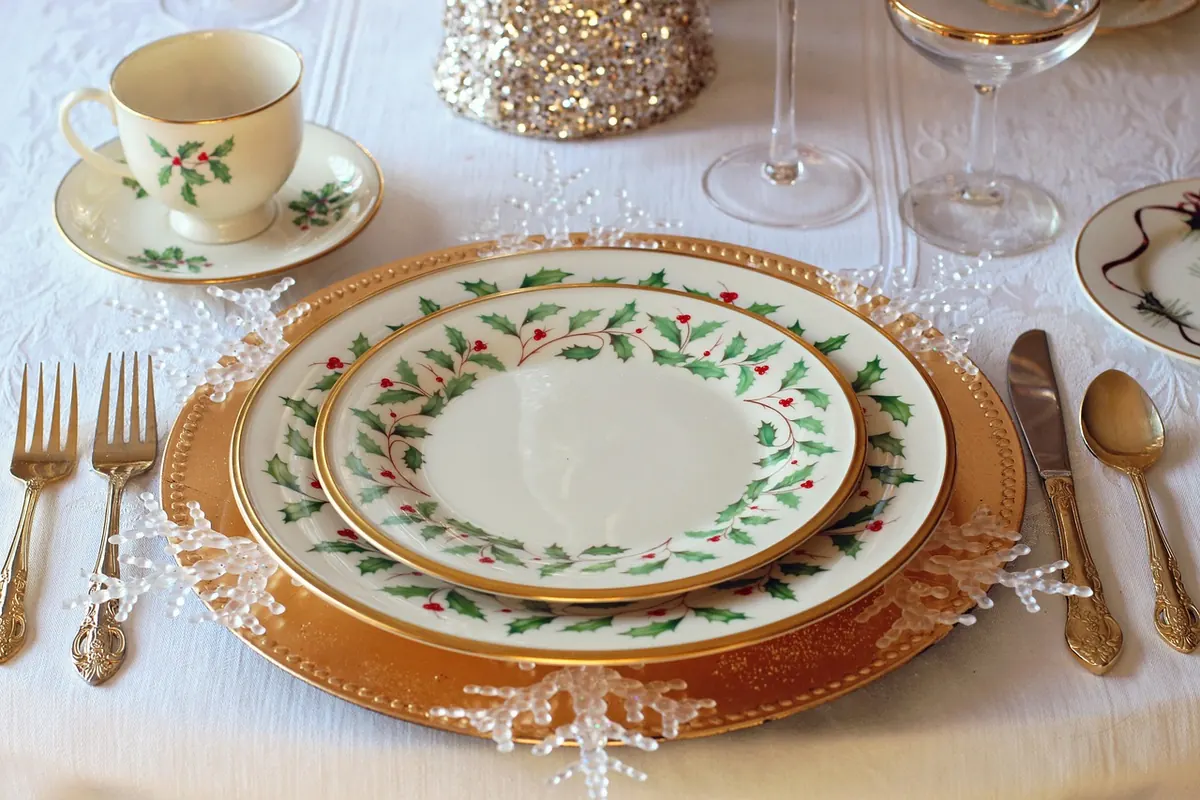
Photo: TerriC / Pixabay