Home Decor
Why British-Grown Flax Could Change How You Buy Linen
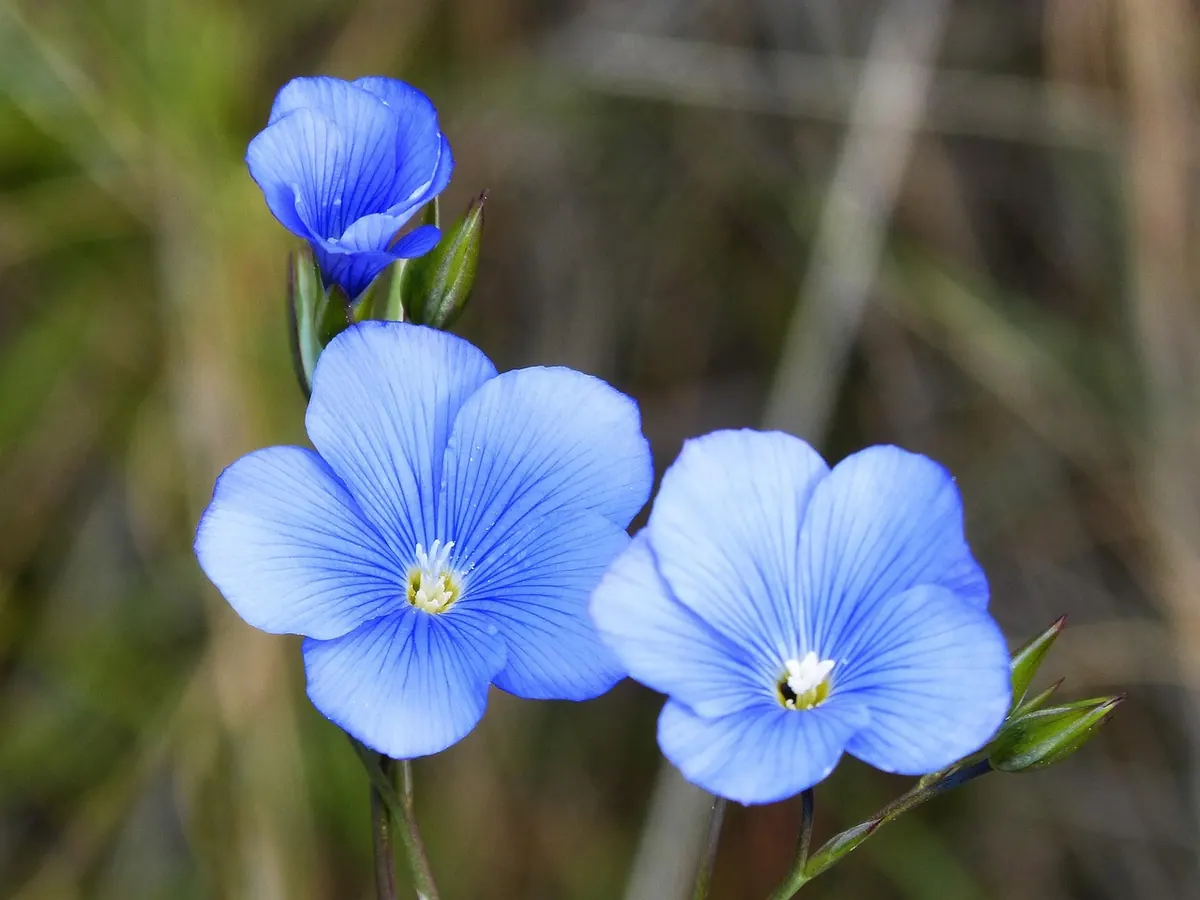
Walk past the right field in late June and you might catch it: a low haze of pale blue flowers on slender stems, holding a crop that Britain once grew in earnest. Flax made Belfast wealthy, filled the linen cupboards of country houses, and gave us a word for hair the colour of straw. Then it largely vanished from our fields, grown instead in northern France, Belgium and the Netherlands, spun and woven further east, and shipped back to us as bedding, shirts and tea towels.
Now a small number of British farmers are sowing it again. That's a modest development, not a revolution, but it has a practical consequence for anyone buying linen: it becomes possible to ask where the fibre actually came from — and to get a real answer.
A crop that left the fields but stayed in the language
Flax has been grown on these islands for centuries, for fibre and for seed. It shaped whole towns, particularly in Ireland and parts of Scotland, where spinning and weaving employed thousands. But processing flax needs water, skill and machinery, and when production moved to places where all three were cheaper, the mills closed and the acreage followed. British farming turned to wheat, barley, oilseed rape and grass.
The crop stayed in our vocabulary even as it left the landscape. We still say linen cupboard. Old oak panelling still has a linenfold pattern. Shops still sell "linen" as a category. The word outlived the fields by a long way.
Why flax is being sown again
Flax suits the way a lot of British farms now think. It's a spring-sown crop that comes off in late summer, so it slots into a rotation alongside cereals. It's not a heavy feeder, and in a normal British year it doesn't need irrigation. It also gives a grower a break from the same diseases and pests that build up in continuous cereal ground.
Growing it, though, is the easy part. Turning stalks into yarn is not. The fibre has to be retted — left to let naturally occurring bacteria loosen it from the woody core — then scutched to break away the straw, then hackled and spun. Britain lost almost all of that infrastructure decades ago.
So the revival is patchy. Some growers are working with small scutching setups and shared equipment. Others send fibre abroad for the next stage, which is precisely the hop across a border that traceability-minded buyers are trying to avoid. Spinning capacity in particular is thin, and that's the bottleneck that matters most for anyone hoping to buy a genuinely British piece of cloth.
Traceability: the bit most brands skip
Here's how a linen supply chain usually runs:
- Flax grown — one country
- Retted and scutched — often another
- Spun into yarn — often a third
- Woven — often a fourth
- Dyed, finished and sewn — often a fifth
Five stages, five sets of hands, and the label on the finished item may only tell you about the last one. Country-of-origin labelling generally points to where the product was last substantially transformed, not where the plant grew. A duvet cover finished and sewn in Portugal might be made from yarn spun in India, from fibre scutched in China, from flax grown in Normandy. Nothing dishonest has happened. It's just that the field is a long way upstream of the label.
Certifications help up to a point. Schemes such as European Flax trace fibre back to Western European farms, which is a genuine step up from an unverified claim. It isn't British, though, and it doesn't tell you where the spinning happened.
What British-grown flax actually gives you
A short chain. When flax is grown, retted, spun and woven close to home, there are far fewer unknowns between the field and your bed. In the best cases you can name the farm, the mill and the weaver — and if something goes wrong, someone can tell you why.
Batch-scale honesty. Small-scale production means small lots. Colour and texture will vary slightly between one run and the next, and no one is blending fifty bales together to make it uniform. Some people find that reassuring rather than irritating.
Money that stays in the chain. Buying British linen supports farm diversification and small mills, and it pays for skills that would otherwise disappear for good.
It also comes with real limits, and it's worth being clear about them. Volumes are small, so ranges sell out and restock slowly. Prices are higher, because you're paying for a short chain and low volume rather than an efficient one. Quality depends heavily on the weather during retting, and some British fibre currently travels abroad to be spun while British brands buy imported yarn. A label reading "woven in Britain" can be perfectly true and still mean very little about the flax.
How to spot genuinely British linen
Questions worth asking
- Which farm or county grew the flax?
- Who retted and scutched it?
- Where was it spun into yarn? This is the step most likely to happen abroad.
- Where was it woven and finished?
- Is there a batch or lot reference I can see?
- Is any of this on the product page, or does it take three emails to find out?
Things that prove nothing on their own
- A British brand name. Where a company is registered says nothing about where its fibre grew.
- "British design" or a Union flag in the logo.
- The word "linen" in a category heading. Bed linen can be cotton, or a cotton-polyester blend.
- "Linen blend" without percentages. A small share of linen behaves nothing like pure linen.
- A farm name with no details behind it. Ask; a good maker will enjoy the question.
One more point on fibres: check the composition label rather than the marketing. Flax is the plant; linen is the cloth made from it. If the label says 100% linen, you're looking at flax fibre. If it says 55% linen, 45% viscose, you're looking at something that will drape and wear quite differently.
What to expect when you buy
Expect to pay more than you would for mass-market linen, and expect a narrower range. Expect slight slubs and irregularities in the weave — that's the nature of the fibre, not a fault. If a maker quotes a fabric weight, take it seriously: bedding and clothing sit in different ranges, and heavier isn't automatically better.
Care is straightforward and unchanged by origin. Wash cool, skip harsh detergents, don't overdry, and let it soften over months rather than expecting shop-new crispness to be the finished state. Linen improves with use. That's most of its appeal.
A simple way to shop for British linen this year
- Start with the fibre, not the styling. Decide whether you want pure linen or an honest blend.
- Ask the questions above before you buy. A maker with a real British supply chain will answer them quickly and specifically.
- Accept variation. If every batch looks identical, the fibre is probably not coming from one small harvest.
- Buy one item first — a pillowcase, a towel, a shirt — and live with it for a few months.
- If a seller can't trace the cloth, treat the British angle as a style choice rather than a supply chain, and buy on quality instead.
The revival is young, and it may stay small. That's fine. What it offers right now isn't a certification you can wave at, but a conversation you can actually have with the people who grew, spun and wove what you're sleeping on. For linen, that's a genuine change.
Photo: makamuki0 / Pixabay