Table Linens
How to Remove Red Wine, Gravy and Candle Wax from Linen Tablecloths
White linen and red wine are a fine pairing in a glass and a disastrous one on the table. The good news is that linen is one of the most forgiving fibres you can spill on. It is strong, it tolerates heat far better than cotton, and it gives up stains readily when you treat them in the right order. What it does not forgive is panic: scrubbing, boiling, or a hot iron before the mark has gone. Here is how to handle the three spills that ruin the most dinners.
Three rules that save a tablecloth
Before the stain-by-stain detail, the general approach. Almost every ruined cloth was ruined by doing one of these three things in the wrong order.
- Blot, never rub. Rubbing pushes the stain into the weave and roughs up the surface. Press a clean cloth or kitchen paper onto the spill and let it draw the liquid out.
- Work from the back. Hold the stained area over a bowl and run water through the underside of the fabric, so you push the stain out of the cloth rather than deeper into it.
- Heat last, always. Hot water, a tumble dryer and an iron all set stains. Nothing gets near heat until the mark has gone.
Linen is a cellulose fibre with a long, smooth staple, which is why stains release so well from it — and why wet linen is noticeably weaker than dry. Handle a soaked tablecloth gently and it will serve you for decades.
Red wine
Fresh spills
Act while the wine is still wet and you will almost always win.
- Blot up what you can with kitchen paper. Do not wipe.
- If you are still at the table, cover the patch with salt or bicarbonate of soda. Leave it ten minutes to draw the wine up, then shake it off. Worth doing even if you plan to deal with the cloth properly later.
- At the sink, hold the stain over a bowl and flush it with cold water from the underside until the water running through is clear.
- Work in a drop of washing-up liquid with your fingertips, then rinse.
- Soak in an oxygen-based stain remover — the powder you dissolve in water, not chlorine bleach — for half an hour. Hand-hot water for white linen, cooler for coloured.
- Wash as normal.
Very old, very tannic wines can leave a purple-brown ghost. Repeat the oxygen soak; two or three rounds are normal. On white linen, laying the damp cloth in direct sunlight can finish the job, though sunlight will also fade coloured linens.
Dried and forgotten marks
A mark you find the next morning, or the next season, needs soaking rather than flushing. Dissolve oxygen stain remover in warm water in a basin, enough to cover the cloth, and leave it for several hours, stirring occasionally. Rinse, then repeat if the outline is still visible. Only then wash.
Resist chlorine bleach. It will whiten a white cloth fast, but it attacks the linen fibre itself, weakening it and leaving a yellow cast that shows up months later. For coloured linen there is no safe way to bleach a wine mark back to the original colour, and a professional dry cleaner is the honest answer.
Gravy and other meat juices
Gravy is awkward because it is three stains at once: fat, protein and colour. Each responds to something different, which is why a single splash of hot water rarely works.
- Spoon off any solids, then blot the liquid.
- Flush with cold water from the back of the fabric.
- Put a drop of washing-up liquid on the greasy area and work it in gently with your fingertips. Rinse with lukewarm water.
- For the protein, soak in lukewarm water with a biological detergent for half an hour. The enzymes need warmth, not heat.
Cool water first, detergent second, heat last.
Dried gravy usually needs an overnight soak in a weak solution of biological detergent, followed by a wash at the highest temperature the care label allows. If a faint greasy ring survives the wash, treat it again with washing-up liquid before drying — once it has been through a hot cycle and dried, it becomes far harder to shift.
Candle wax
Wax is not a stain in the usual sense; it is fat, and water will not move it. Trying to wash wax out only spreads it.
- Let the wax cool completely. Hold an ice cube in a small bag against it, or put the cloth in the freezer for twenty minutes.
- Pick the brittle wax off with a fingernail or the back of a blunt knife. Do not take a sharp blade across the weave.
- Lay the cloth flat with kitchen paper or brown paper above and below the waxy patch. Press with a warm, dry iron — no steam. The wax melts and transfers into the paper. Move to a clean piece of paper as it soaks up, and repeat until nothing more comes away.
- Wax often carries dye with it, so check for a coloured shadow afterwards. Treat that with washing-up liquid and a warm soak, then an oxygen stain remover if it lingers.
Do all of this before the cloth goes anywhere near the washing machine or a steaming iron. A wax mark pressed into linen is a long afternoon's work.
What never to do to wet linen
Wet linen behaves differently from dry linen, and most damage happens in the ten minutes after a spill.
- Never wring or twist it. The fibres are weaker wet, and hard creases pressed in now are difficult to press out later.
- Never scrub with a stiff brush. It abrades the surface and leaves a dull, pilled patch that no amount of ironing will fix.
- Never leave it bunched in a bucket, or overnight in the drum. Damp linen left folded creases sharply and can develop mildew. Spread it out or hang it.
- Never use chlorine bleach. It weakens linen and yellows it over time.
- Never iron or tumble dry a cloth with the stain still in it. Heat sets whatever it touches.
- Never soak for days. Long soaking dulls colour and softens the finish.
Finishing, drying and a small stain kit
Once the mark is out, wash at the temperature on the care label — often 60°C for white linen, 40°C for coloured. Take the cloth out while it is still slightly
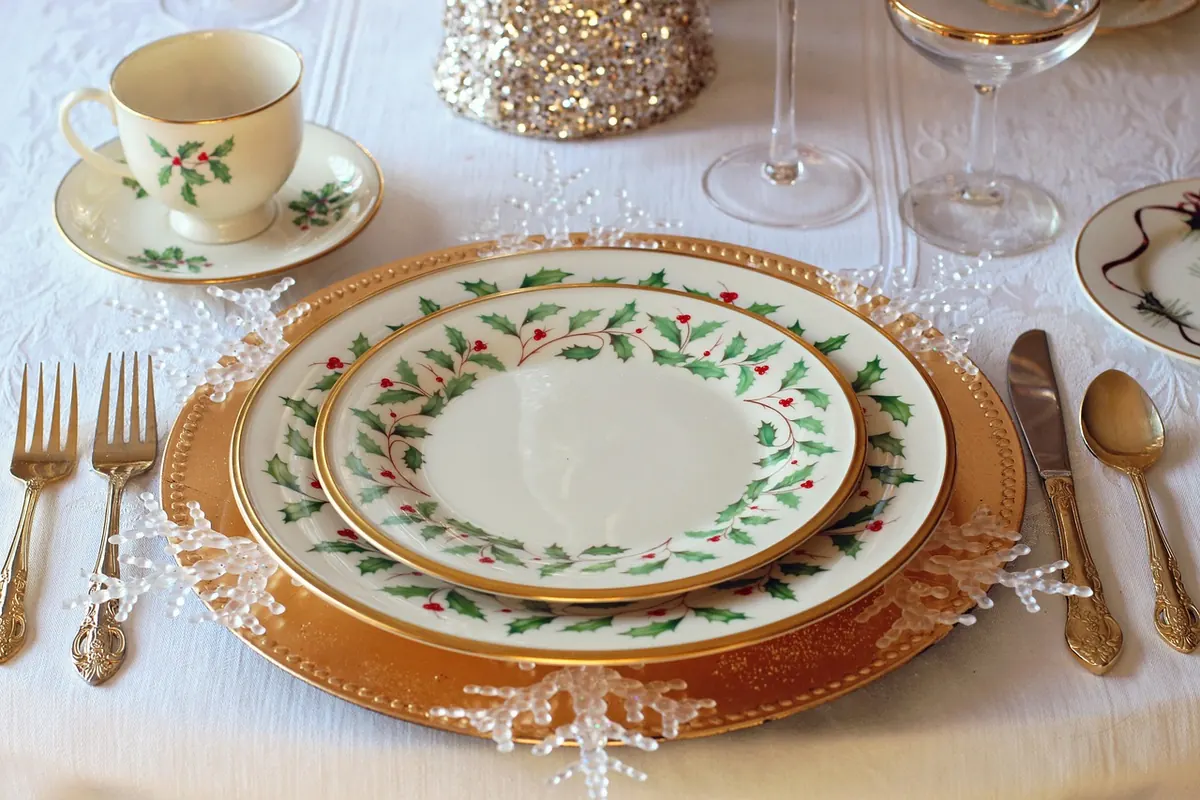
Photo: congerdesign / Pixabay